

Emilio Estevezs storied Hollywood career was nearly cut short before it even began, but thanks to the impulsive bravery of a lifelong friend, he was saved from a perilous situation. As an extra on the set of Francis Ford Coppolas Vietnam War epicApocalypse Now, starring his father Martin Sheen, Estevez befriended a young Lawrence Fishburne. During a break in the Philippines, the two took a leisurely boat ride down a nearby river. As the boat drifted too close to the bank, Estevez offered to get out and push it back to the center. But as soon as he stepped out, he began sinking into the river muck like quicksand. Without hesitation, Fishburne extended his hand and pulled Estevez back into the boat, saving his life. All that dancing with death for his extra work to be cut from the final film.
So what kind of life did that turn out to be? To know that, we must do as we always do, return to the beginning where the beginning began, when he was born on May 12, 1962 in the New York City borough of Staten Island. His family soon moved to Malibu, California, where he grew up with fellow Brat Pack members Rob Lowe and Sean Penn. He was usually the writer on the short films the boys made together. Six years before he saw a white light on the set ofApocalypse Now, Estevez had a bit part on Terrence MalicksBadlands, also starring his father.
Emilio Estevez chose to keep his birth name, rather than adopting a stage name, as a testament to his pride in his family heritage. He wanted to forge his own path and make a name for himself without relying on his fathers legendary status. Estevez has stated that he was motivated to succeed on his own terms, without riding the coattails of his fathers fame. By keeping his real name, he aimed to prove himself as a talented individual in his own right, separate from the Sheen family legacy.
This decision reflects Estevezs determination to establish his own identity and reputation in the entertainment industry. He wanted to be recognized for his own accomplishments, rather than simply being known as Martin Sheens son. By retaining his birth name, Estevez demonstrated a sense of self-confidence and a willingness to take risks, which has served him well throughout his career.
Emilio Estevezs career in Hollywood spans over four decades, with a diverse range of films that showcase his talent as an actor, writer, and director. One of his early roles was in the 1982 filmTex, where he played the lead character of Tex McCormick, a teenager who gets into trouble with the law. This film marked the beginning of Estevezs journey in the film industry, and he soon became a part of the iconic Brat Pack group, alongside actors like Rob Lowe, Andrew McCarthy, and Judd Nelson.
In 1983, Estevez appeared in Francis Ford CoppolasThe Outsiders, playing the role of Two-Bit Matthews, a charismatic and laid-back teenager who is part of a group of greasers in a small town in Oklahoma. This film was a critical and commercial success, and it cemented Estevezs status as a rising star in Hollywood. He brought a sense of humor and charm to the role, and his chemistry with the other actors made the film a memorable one. His experience on the movie taught him the importance of subtlety and depth in character development.
Estevezs breakthrough role came in 1984 with the cult classic science fiction filmRepo Man, where he played the role of Otto Maddox, a young punk rocker who becomes a repo man. This film was a critical and commercial success, and it established Estevez as a talented young actor who could play complex and nuanced characters. He brought a sense of energy and rebelliousness to the role, and his performance helped make the film a cult classic.Repo Manhas gone on to influence many counterculture films, especially those that involve punk rock culture, and it is often cited as a cult classic and an inspiration by many filmmakers.
In 1985, Estevez appeared in two iconic films that would cement his status as a member of the Brat Pack. The first wasSt. Elmos Fire, a coming-of-age drama about a group of recent college graduates struggling to find their place in the world. Estevez played the role of Kirby Keager, a charming but aimless young man who is trying to find his way. He brought a sense of vulnerability to the role, and his chemistry with the other actors made the film a memorable one.
The second film wasThe Breakfast Club, a classic John Hughes film about a group of high school students from different cliques who spend a Saturday in detention together. Estevez played the role of Andrew Clark, a popular athlete who is initially hostile to the other students but eventually opens up and shares his vulnerabilities. This film was a critical and commercial success, and it remains one of the most iconic teen movies of all time.
The Breakfast Clubhas become a cultural touchstone for its authentic portrayal of teenage struggles, capturing the angst, rebellion, and vulnerability of adolescence in a way that continues to resonate with audiences today. Its enduring relatability has made it a timeless classic, with generations of viewers identifying with the films iconic characters and their struggles with identity, social hierarchy, and self-discovery, cementing its place as a landmark of coming-of-age cinema. Estevezs performance was praised for its nuance and sensitivity, and he brought a sense of depth and complexity to the role. The role further showed him the value of ensemble storytelling and the power of diverse perspectives.
Emilio Estevez made his directorial debut with the 1986 filmWisdom, a crime drama that he also wrote and starred in alongside Demi Moore. This achievement marked him, at just age 24, as one of the youngest individuals to ever write, direct, and star in a single major motion picture, showcasing his versatility and talent as a filmmaker. In the film, Estevez plays John Wisdom, a young outlaw who embarks on a crime spree with his girlfriend, played by Moore. Although the film received mixed reviews, Estevezs ambitious debut demonstrated his creative vision and ability to tackle complex roles as a triple threat in the film industry.
In 1988, Estevez appeared in the western filmYoung Guns, playing the role of Billy the Kid, a notorious outlaw who is part of a group of gunslingers in New Mexico. This film was a critical and commercial success, and it established Estevez as a talented young actor who could play complex and nuanced characters. He brought a sense of charisma and energy to the role, and his chemistry with the other actors made the film a memorable one. He reprised the role in the 1990 sequelYoung Guns II, which was also a success.
In the 1990s, Estevez continued to explore his talent as a writer and director. He co-wrote, directed, and starred in the 1990 filmMen at Workwith his brother Charlie Sheen, a comedy about two garbagemen who get caught up in a crime plot. In 1992, Estevez appeared in the science fiction filmFreejack, playing the role of Alex Furlong, a race car driver who is transported into the future and becomes a freejack, a person who is hunted by a group of mercenaries. This film was a critical and commercial failure, but Estevezs performance was praised for its energy and charisma. Despite the films lack of success, Estevezs dedication to his craft and his ability to bring depth and nuance to his characters were evident. Plus, there was the thriller Judgment Night. Although it wasnt a hit when it came out in 1993, it developed a huge cult following in the years to come, being propelled by its legendary soundtrack.
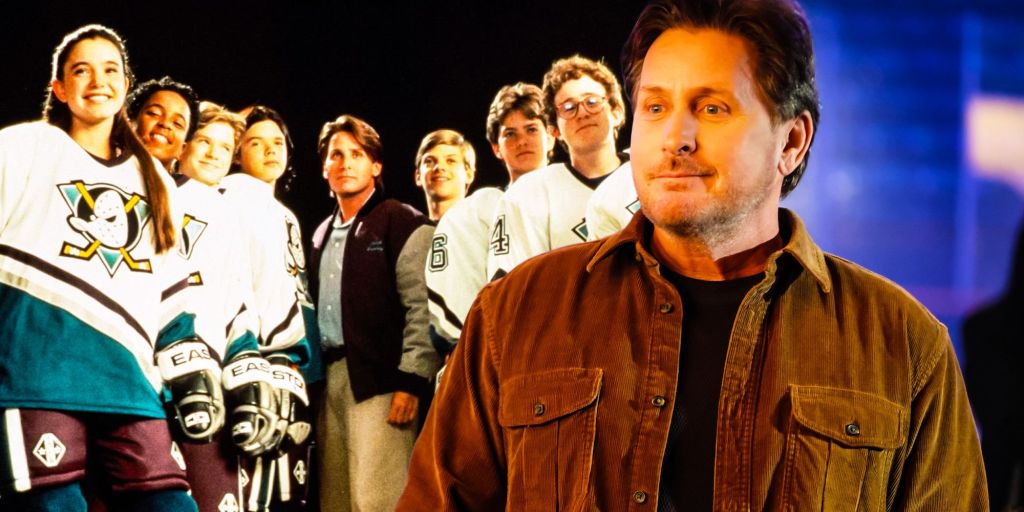
Estevez notably appeared in the 1992 filmThe Mighty Ducks, a family-friendly sports film about a group of misfit kids who form a hockey team. His charm and charisma as Coach Gordon Bombay made the film a beloved classic, despite not being a hit with critics. He reprised the role in the 1994 sequelD2: The Mighty Ducksand the 1996 threequelD3: The Mighty Ducks, both of which were also successful.
In 1996, Emilio Estevez directed and starred in the drama filmThe War at Home, playing the role of Jeremy Collier, a Vietnam War veteran struggling to adjust to civilian life. Estevez, starring alongside his father Martin Sheen, delivered a powerful performance that brought depth and nuance to the character, and the film received critical acclaim for its thoughtful and sensitive portrayal of a complex and timely issue. The film explores the emotional and psychological toll of war on soldiers and their families, and Estevezs direction and writing were praised for their insight and compassion, demonstrating his skill and dedication as a filmmaker. Many still considerThe War at Homehis strongest directorial effort.
In 2006, after a few smaller roles in the late 90s and early 2000s, Estevez wrote and directed the drama filmBobby, which tells the story of the assassination of Robert F. Kennedy and its impact on a group of people who were at the Ambassador Hotel on the night of the shooting. Estevez also appeared in the film, playing the role of Tim Fallon, a campaign volunteer who is struggling to come to terms with the tragedy. This film was a commercial success, and Estevezs direction and writing were praised for their sensitivity and nuance. The films all-star cast, which included Anthony Hopkins, William H. Macy, and Sharon Stone, among others, also received critical acclaim. Estevezs passion for the project and his commitment to telling an important story were evident throughout the film. Estevez continued to explore his creative vision with the 2010 filmThe Way, a drama about a man who goes on a spiritual pilgrimage after the death of his son, which he wrote, directed, and starred in.
After a long absence from the public eye, Estevez returned to the screen in 2018 with the filmThe Public, a drama about a group of homeless people who take refuge in a public library during a cold winter night. Estevez wrote, directed, and starred in the film, which marked a triumphant return to the screen. His absence from the public eye was due to his aversion to the spotlight and a desire to focus on his personal life, rather than any lack of creative drive. He also reprised his role as Coach Gordon Bombay in the 2021 Disney+ TV seriesThe Mighty Ducks: Game Changers, but exited after the first season due to a contract dispute. There was a report that the dispute was over Disneys vaccination mandate for contractors, but Estevez has denied the report, claiming that if anything, he was overly cautious about the disease after having contracted a symptomatic variant.
Estevezs upcoming projects include a follow-up toThe Wayand a new installment in theYoung Gunsfranchise, both of which are currently in pre-production. Estevez has built a lasting legacy in Hollywood, continues to be a talented and versatile actor, writer, and director, and his upcoming projects are highly anticipated by fans and critics alike.
Emilio Estevez has had several famous friendships that have shaped his career and the culture. As part of the Brat Pack, he befriended Tom Cruise, Judd Nelson, Molly Ringwald, and Rob Lowe, with whom he starred in iconic coming-of-age films likeThe Outsiders,The Breakfast Club, andSt. Elmos Fire. His close relationships with these actors and actresses, including a high-profile romance with Demi Moore, have had a lasting impact on the entertainment industry and continue to influence pop culture today.
Emilio Estevez has long been committed to social and political activism, using his platform as a filmmaker to raise awareness about important issues and spark meaningful conversations. His passion for social justice is deeply rooted in his Catholic upbringing and his experiences growing up in a family of artists and activists. Estevez has been involved in various causes, including anti-war efforts, such as Veterans for Peace, environmentalism, supporting organizations like the Sea Shepherd Conservation Society, human rights, working with groups like Amnesty International and the American Civil Liberties Union, and arts education, partnering with the California Arts Council and the Los Angeles County Museum of Art.
He has also supported childrens hospitals and organizations that provide aid to homeless individuals, and has been involved in disaster relief efforts, such as the 2018 California wildfires and the 2020 COVID-19 pandemic. Through his work and philanthropy, Emilio Estevez continues to inspire and educate audiences, using his platform to make a positive impact on the world.
Estevezs activism is deeply intertwined with his work as a filmmaker, with many of his projects tackling complex social and political issues. Estevezs commitment to activism and social justice is evident in the thoughtful and nuanced way he approaches these topics, and his films have been praised for their sensitivity, compassion, and ability to spark important conversations. Through his work, Estevez continues to inspire and educate audiences, using his platform to make a positive impact on the world.
Emilio Estevezs multifaceted experiences as a writer, director, and actor have profoundly influenced his approach to filmmaking, fostering a holistic understanding of the craft and a distinctive artistic vision. Through his early acting roles, he developed a deep appreciation for character development and nuanced storytelling. As a writer and director, he has honed his ability to craft complex, thought-provoking narratives that explore the human condition. Over the years, his artistic vision has evolved and matured, reflecting his growing interest in exploring themes of social justice, personal growth, and redemption. His experiences have taught him the importance of authenticity, empathy, and collaboration, allowing him to approach filmmaking with a sense of purpose and passion. As a result, his films have become more nuanced, introspective, and impactful, resonating with audiences on a deeper level. Through his body of work, Estevez has demonstrated a commitment to storytelling that is both personal and universal, leaving an indelible mark on the world of cinema.
Emilio Estevez successfully carved out his own niche in the entertainment industry, emerging from the shadow of his fathers iconic career and the intense public scrutiny surrounding his brother, Charlie Sheen. While his brothers tumultuous personal life and controversial antics often dominated headlines, Estevez focused on building a reputation as a talented writer, director, and actor in his own right. Through his dedication and perseverance, he has established a distinctive body of work that stands the test of time.
The post What Happened to Emilio Estevez? appeared first on JoBlo.
What Happened to Emilio Estevez? on www.joblo.com. Keep reading.


