

(Photo Credit: Magnet Releasing)
ComingSoon Editor-in-Chief Tyler Treese spoke to The Convert director Lee Tamahori about the new war drama movie starring Guy Pearce. Tamahori spoke about the films story, working with Pearce, and more. Magnet Releasing releases the historical epic in theaters and on demand today, July 12, 2024.
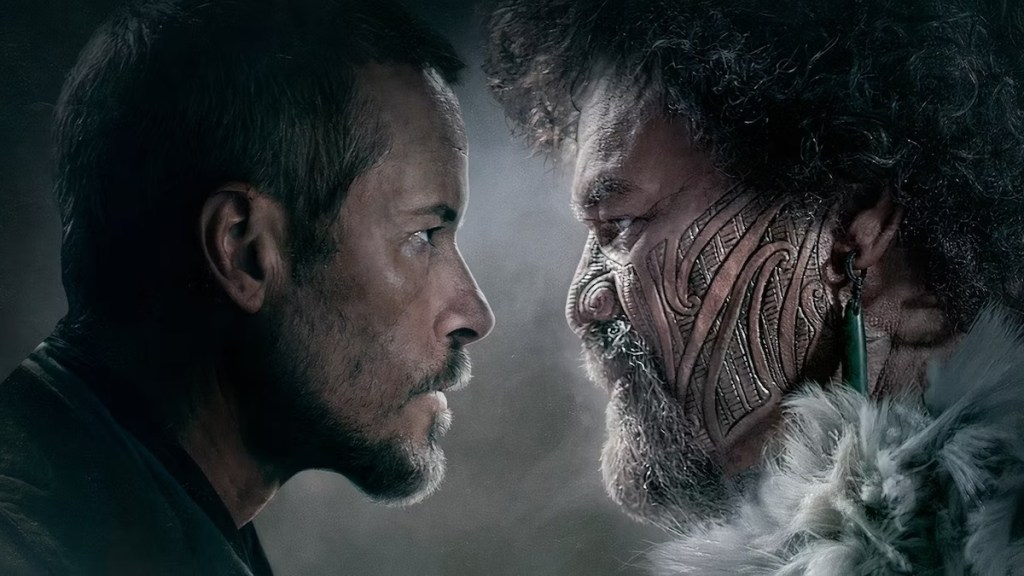
Lee Tamahoris action-filled historical epic stars Guy Pearce as Thomas Munro, a newly arrived preacher in a colonial town in early 19th-century New Zealand who finds himself at the center of a long-standing battle between two Mori tribes, says the synopsis.
Tyler Treese: The viewer sees this story through the perspective of Guy Pearces Thomas Monroe. Why was he the right choice to really act as the lens for the audience?
Lee Tamahori: Well, I wanted a character from the history of this period. Other than the foreign whalers and sailing crews, the first contact with Mori was lay preachers from the Church Missionary Society of Great Britain. Ive never been very interested in religious figures, but I was very interested in turning my main character into a humanist who believes in God but has lots of doubts and is really going as far away in the world as he can from Great Britain to New Zealand to get away from his demons. He cant get away from them wherever he goes. So I was more interested in this troubled character whos looking for a sense of purpose in life, and he finds it in this far-flung part of the world.
I was really impressed with the actress Tioreore Ngatai-Melbourne in this film and to see her growth since Hunt for the Wilderpeople. Can you speak to working with her? Because this really seems like a breakthrough role for her.
Yeah, sure is. Shes remarkable. I auditioned quite a few younger female actors, but she stood out, and she spoke the language fluently. So she was high on my list, and she just adapted into the character and just [brought] the character ferocity to her. But in drawing her character and writing up her character, I was well aware of the white savior trope and all that. We went into it knowing full well what we were up against, the Pocahontas routine, et cetera. But I decided to turn it on its head and have everyone think that its gonna be the white savior routine when its really not.
Monroes an observer of events around him, which he can really do very little to influence. He tries in his own way throughout the film to influence. But what I wanted to show more than anything else with Tioreores female character that she was not a love interest, but there was a respect between the two of them. By the end of the film, a mutual almost platonic love and respect, which I think came through quite strongly by the time the films over.
I always admire a film that entertains me for two hours and then has me just googling and going down a rabbit hole for three hours later. I spent so much time after this film just looking into the real-life history and what was going on in 1830s New Zealand. It was so fascinating. For you, even though youre not strictly beholden to historical accuracy, what does it mean for you to kind of open that door and let people venture forward and look into these aspects that they might not know about?
Oh, its very important to me. We were telling a fiction based on historical facts, these things, some of the things in the film, happened in a different form, but Akatarewa, the main villain of the piece, not really a villain of the piece, but hes, hes based on a couple of major characters around that period. But it was important for me to get an authenticity across to the audience because we, even in New Zealand, know very little about that period ourselves because white European settlers were outnumbered by 3000 to one by Mori, which is a highly unusual situation. They were unable to affect anything. There was a lot of [conflict] and warfare going on between Mori tribal structures. Once Muskets came into it and were introduced into the mix, it changed the whole dynamic of the conflict between warring tribes.
This is definitely a very character-driven story, but there are some really great action pieces, especially at the end. How was it kind of finding that balance to the story and keeping viewers engaged throughout the entire film?
Yeah, well, its a trick. Youve got a story to tell, but youve gotta keep the audience in the theater and keep them interested and keep them engaged. So theres a small burst of action at the beginning. Then theres a big lull in the story as events take hold, but youre always leading inexorably to something.
I always know that, having made a few films now, that people go, go out of the theater remembering the end of the film rather than the beginning. So I always saved the last part of it, the action, up to where it is. Its a deliberate construct, but you just gotta keep people interested in where the story is going to. They think they know that the inevitable thing is gonna happen, but just gotta lead them along there to the end.
Guy Pearce is just fantastic throughout this, and I was really glad to see you both working together. What really sticks out about him as a leading man? Youve worked with some really great ones throughout your career.
He is Australian. Im New Zealand, but we share pretty similar cultures and hes just a great bloke, as we say over here. He doesnt have any presumptions. He doesnt have any, he and Graces. Hes happy to wake up every day and go to work and be blessed and be doing what hes doing as an actor.
But Ive been fascinated with him for decades because hes such a chameleon. He can adapt to any role and really become that role. I find he can bring an authenticity to his character, like in The Proposition. He really just nails it. So working with him was a breeze, and we loved working together. It was because we changed things. Wed have the script down to a particular part, but then Guy would say, What about this? And Id say, Yeah. Why dont do that? We just change it immediately on the day to suit it because it suits his character better.
Your great 1994 film, Once Were Warriors, turns 30 this year. That was a real breakthrough moment for your career and a huge film. How do you kinda look upon that films legacy, a few decades removed?
Well, it sort of, yes, it defined my place in the film industry, really, without a doubt. Strange, though, because I never thought it would. I thought the thing would die a natural death and just be seen by a few people, and maybe in an obscure film festival or something because it was just so gut-wrenching. I didnt think anyone would really be able to stomach it. Even in New Zealand. I thought it would fail dismally in New Zealand.
I watched it a year and a half ago to see how it stood up in the test of time, and it holds up really well. Apart from certain things like cars and a few other things, the world itself is still exactly the same as it would be today, and the dialogue is the same. There are just no smartphones, and people will communicate, but it holds up really well. Musically, it holds up well, too. You could play the music today. The soundtrack is just as relevant today.
The post The Convert Director Lee Tamahori Talks Mori War Movie appeared first on ComingSoon.net – Movie Trailers, TV & Streaming News, and More.
The Convert Director Lee Tamahori Talks Mori War Movie on www.comingsoon.net. Keep reading.


