

How do you follow up a classic like James Camerons Terminator 2: Judgment Day? Well, you dont even try and instead make Terminator 3: Rise of the Machines, which continues John Connors story, so the studio can produce more sequels. T3 essentially served as the movie required to get to the movie the studio wanted to make Terminator: Salvation.
Now, why they didnt just set the third chapter in the future war in the first place remains a mystery. Amirite Terminator: Resistance fans?
No matter, following the disappointing but admittedly effective T3, Terminator: Salvation blasted its way into theaters under the pretense that it would expand the story only teased in Camerons first two pictures. Finally, we would see the terrifying future war revolving around mankinds efforts against Skynet and the machines. Finally, we would see John Connor as the leader he was always meant to be. Finally, we would know how a ragtag military of bruised and battered soldiers overthrew a seemingly unstoppable army of deadly laser-packing cyborgs.
Cameron teased as much with his Terminator 3D attraction at Universal Studios:
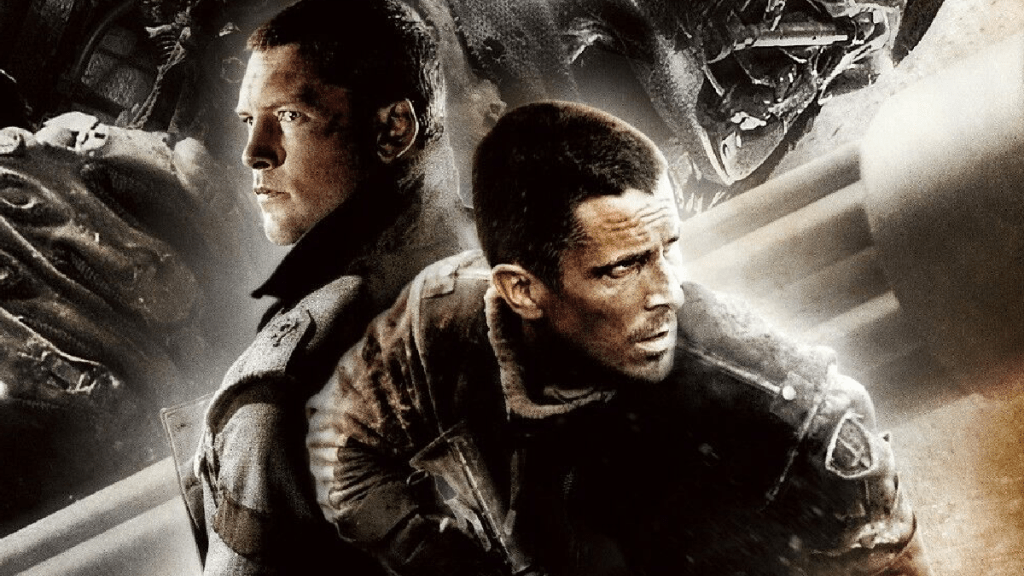
Alas, as directed by McG, Terminator: Resistance checked none of those boxes. Instead, audiences were given a gloomy, gritty, post-apocalyptic action adventure likely pitched as Transformers meets Mad Max, featuring a significantly different look and feel to Camerons films. Rather than witnessing a high-tech war packed with purple-tinted lasers, hunter-killers, and slickly designed metal baddies, we watched characters like John Connor (Christian Bale) and Kyle Reese (Anton Yelchin) zip around on motorcycles, jets, and helicopters, evading clunky steampunk machines in the middle of an unremarkable desert. Desaturated earthy tones replace Camerons steely blue palette ripped straight from Children of Men. Action scenes lack the grit and grime seen in the first two Terminators. Characters freely move about this dangerous world, andmany of them, like Bryce Dallas Howards Kate Connor, look like they just stepped out of a Variety photoshoot.
If Cameron had directed Terminator: Salvation, wed still be discussing it today. Instead, the reins fell to McG, a capable action director likely marred (like T3 director Jonathon Mostow) by the committees approach to filmmaking. Rather than enjoy the vision of a singular creative, were stuck trying to comprehend a hodgepodge of ideas pulled from various writers and producers.
Skynet was meant to save humanity at one point in the creative stages, a ludicrous (and unnecessary) twist that undermines the entire franchise. The script contained an ending in which John dies and has his skin placed over a robot skeleton. Did anyone involved in Salvation see the original Terminator films?
Terminator: Salvation holds its ground as a standalone post-apocalyptic thriller. McG delivers large-scale spectacle and a handful of exhilarating action sequences, such as when a massive Harvester somehow sneaks up and attacks an outpost holding survivors:
I even dug the Droid Factory finale, where John and Sam Worthingtons Marcus Wright take on a T-800:
Id enjoy Salvation if it was called Robot Uprising and kept in one of those discount movie bins at Target. However, as a continuation of the Terminator saga, it fails to capture the essence and style that made The Terminator and its sequel slam-bang classics.
A recent rewatch to celebrate the films 15th anniversary did nothing to change my stance. Still, looking back, its the best of the Terminator sequelsa low bar to clear, but worth mentioning. Rise of the Machines, Genisys, and Dark Fate spend too much time recreating past films and often feel more like a collection of greatest hits than novel new entries in the franchise. Salvation, at the very least, tries to do something different. (Also, for the record, I think Bale and Worthington are pretty great in this, along with the supporting cast.)
John, for instance, is less of a leader than a messiah. Some devoutly follow him, while others scorn him. His expected role as a military leader never comes to fruition due to an altered timeline. In other words, this isnt the future his mother told him about, which makes sense until it doesnt. His vast knowledge doesnt achieve the desired effect and nearly kills him. (Theres also a magical kid who happens topossessevery item needed at any given time, but whatevs.)
Enter Worthingtons mysterious Marcus Wright, a human/machine hybrid unaware of his technical side. After bumbling around with Kyle Reese through much of the film, Marcus ends up at Skynet, where Helena Bonham Carter (in a goofy cameo) explains how he was designed to befriend and lure John into a trap. As Qui-Gon Jinn would say, A wise plan, until you think about it.
After reading the alternate endings, Salvations clunky story beats make more sense. Marcuss unintentional action leads to Johns death, necessitating his assumption of the mantle of humanitys savior. The humans only win because their leader is a got-darned robotirony! Its not a good ending or one that anyone asked for, but it makes sense within the context of the film. Maybe it propels the franchise in a new novel direction or sinks the whole saga; that ending gets people talking. (Another ending had Marcus kill everyone, effectively terminating the war.)
Again, too many hands in the pie lead to a Frankenstein monster of a film, replete with storylines that go nowhere, underdeveloped characters likely being developed for future projects, and a clunky narrative cynically conceived to set up another picture. Salvations biggest sin is that it doesnt go bonkers enough with its ideas and instead retreats to the safety of mediocrity. I dont hate it or love it. As an action flick, it gets the job done and is the closest weve gotten to the prophesied future war.
James Cameron is one of the greatest filmmakers of all time. Theres a reason other directors refuse to follow in his footsteps. His films are classics but requirea shit amount oftime, money, and skill to create. At this point, Ive stopped waiting for a proper sequel to Aliens and Terminator. Unless Cameron is involved, those films will never come to pass.
Still, fans deserve more. I respect that McG and Co. tried something new with Salvation. Considering the messy production, the sequel is far better than it has any right to be. Yet, by embracing the weird, McG and his writers forget what made Camerons entries so captivatingtheir simplicity.
Terminator and T2 were (like Camerons other films) straightforward pictures with a substantial devotion to character. The Terminator resonates with audiences primarily because of Linda Hamiltons Sarah Connor and Arnold Schwarzeneggers unstoppable killing machine. T2 ups the ante and spectacle but never loses sight of its core characters, John (Edward Furlong), Sarah, and the reprogrammed T-800.
Contrived plots, clunky story beats, and an over-reliance on action bog down the other Terminator sequels. They lack the heart and soul of Camerons first two pictures and lean on silly marketing gimmicks that undermined previous entries to keep the story moving. Then Cameron returned and tried to reset the whole thing by killing John Connor. What the hell was that?
Salvation contains all the right pieces but never glues them together into a satisfying whole. Fifteen years later, the fourth entry dazzles and frustrates in equal measure, mainly because we now know what the future holds for the franchiseand it aint great.
Hasta la vista, Terminator.
The post Terminator: Salvation Remains a Frustrating Sequel 15 Years Later appeared first on ComingSoon.net – Movie Trailers, TV & Streaming News, and More.


