

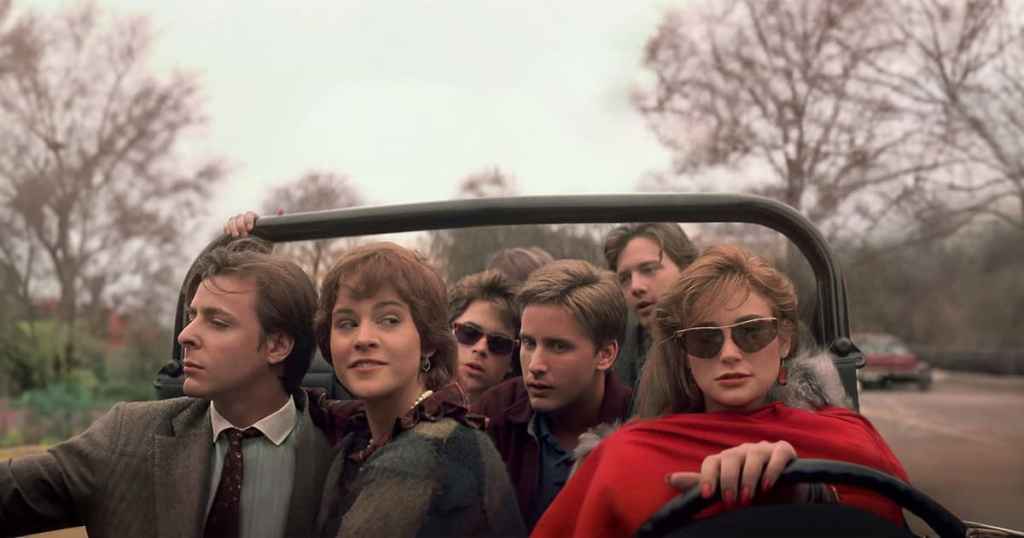
PLOT: In the mid-nineties, a group of young actors known for starring in movies like St Elmos Fire and The Breakfast Club became popularly known as The Brat Pack, but many members of that group felt the term torpedoed their careers.
REVIEW: If you grew up in the eighties, you for sure knew what the name The Brat Pack meant. I was born in 81 and only watched the movies this gang was known for in the nineties, but if you had asked me as a kid who was in The Brat Pack, I probably still would have been able to list them off by name. There was Emilio Estevez (a recent WTF Happened to this Celebrity pick), Rob Lowe, Judd Nelson, Molly RIngwald, Demi Moore, Anthony Michael Hall, Ally Sheedy, and Andrew McCarthy. Some of them became enduring stars, and some didnt. For those whose fame perhaps didnt endure beyond the eighties, the label, in their minds, limited their careers, and now one of them, Andrew McCarthy, has made a feature-length documentary (streaming on Hulu) about grappling with the label.
For those who may not know, the terms genesis came from journalist David Blum, a writer for New York Magazine, who was assigned a profile on Emilio Estevez in the lead-up to the release of St. Elmos Fire. Estevez, in a moment hed come to regret, invited Blum to go out partying with him, Nelson, and Lowe one night, and the chronicle of their bratty behaviour, which included dodging paying $7 to see Ladyhawke at a movie theatre and making fun of the women that threw themselves at them, ended up becoming an article that would define them forever.
Brats feels like a therapy session for McCarthy, who seems utterly unable to reconcile how his career turned out with this label. Whats Ironic is that McCarthy is only mentioned once in the article, with one of the guys sniffing that that hes not going to make it as a star. Yet, the label stuck with him because he was in St. Elmos Fire. As he explains in the documentary, he was a serious actor from New York with aspirations of greatness (and a hefty dose of pretentiousness), and he felt that it sidelined him as a lightweight. Emilio Estevez seems to feel the same way, but McCarthys narrative is flawed. He never acknowledges the fact that Estevez became a huge star AFTER the whole Brat Pack phenomenon died down and that he himself went on to star in two massively successful comedies, Mannequin and Weekend at Bernies (as well as its sequel) and that is was likely those movies that classified him, rightly or wrongly, as a lightweight.
Yet, as flawed as his narrative is, Brats is utterly absorbing in how unguarded it is; it is clear McCarthy is still extremely bitter about the whole thing, especially once he sits down with the writer David Blum, whos (rightly) unapologetic. But McCarthy also doesnt shy away from presenting himself as someone who cant let go, with everyone else he was able to convince to go on camera trying to convince him that being in The Brat Pack wasnt all bad. Demi Moore, who became the biggest female star of the nineties, looks back at the eighties fondly, with her even stating that her work on St Elmos Fire saved her from spiralling into drug addiction (with her praising the late Joel Schumachers interventions). Ally Sheedy admits to struggling with the label and says if she could choose a life with or without the label, shed opt to keep it, as it opened doors for better or worse. Best of all is Rob Lowe, who seems genuinely surprised that McCarthy is bitter about it, with him remembering it as something that bugged him at the time but that hes now able to look back fondly at.
Whats perhaps most telling of all are the folks McCarthy wasnt able tit interview, such as Molly Ringwald, Judd Nelson and Anthony Michael Hall. While Halls had a great career, Ringwalds excuse that she doesnt like looking at the past rings hollow, while Nelson, whos perhaps had the hardest time of all escaping its shadow, seems quite bitter about the whole thing by virtue of being absent. By the time it ends, McCarthy still seems to be struggling with the label, but perhaps not for long, as the notoriety of the documentary seems to have reinvigorated his career, with Columbia now developing a St Elmos Fire legacy sequel that may reunite the Brat Pack on the big screen. While I disagreed thoroughly with McCarthys thesis that it ruined his career, Brats is still utterly compelling, and the director deserves praise for allowing himself to be contradicted by his contemporaries.
The post Brats Review appeared first on JoBlo.


